
Language:


Karaage is a real highlight of Japanese cuisine – juicy, crispy deep-fried chicken that can be found in every izakaya (Japanese pub) and Bento Box. Whether hot or cold, karaage is a treat that’s guaranteed to be a hit at parties and family gatherings. With this simple recipe, you’ll learn all the secrets to perfect preparation and can whip up this popular dish at home in no time :).
What makes karaage so irresistible?
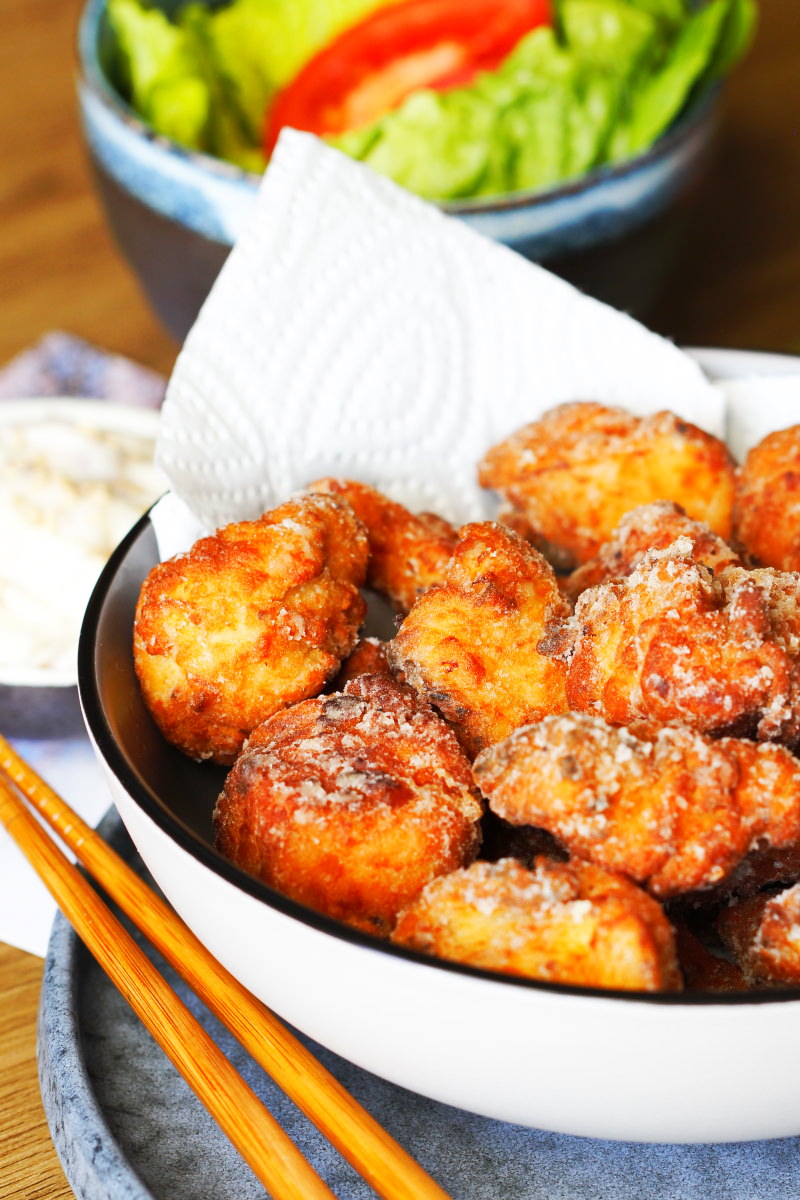
Karaage is one of the world’s most popular fried chicken recipes. Its special appeal lies in the combination of a savoury, slightly sweet marinade, which makes the chicken aromatic and juicy, and a minimalist coating that ensures exceptional crispiness.
Once you’ve tried it, karaage will quickly become your favourite dish!
The recipe is a staple of Japanese cuisine and has a fascinating history. Its origins date back to the 16th century, when the Portuguese brought the technique of deep-frying to Japan. The term “karaage” means “deep-fried things” and describes a method in which chicken is marinated in soy sauce, Sake and spices, coated in potato starch and then deep-fried until crispy.

Tip
To get the crispiest possible Karaage, fry the chicken in two stages. First, fry it over medium heat (approx. 160°C) for 3-4 minutes until it forms a light crust. Let it cool briefly, then fry it a second time over higher heat (approx. 180°C) for another 1-2 minutes. This double-frying process gives you a super-crispy coating while keeping the inside juicy.
Karaage is a particularly popular snack in izakayas, Japanese pubs. It’s perfect for sharing and is often served with beer or sake. Karaage is also a favourite in bento boxes, since it can be enjoyed both hot and cold.
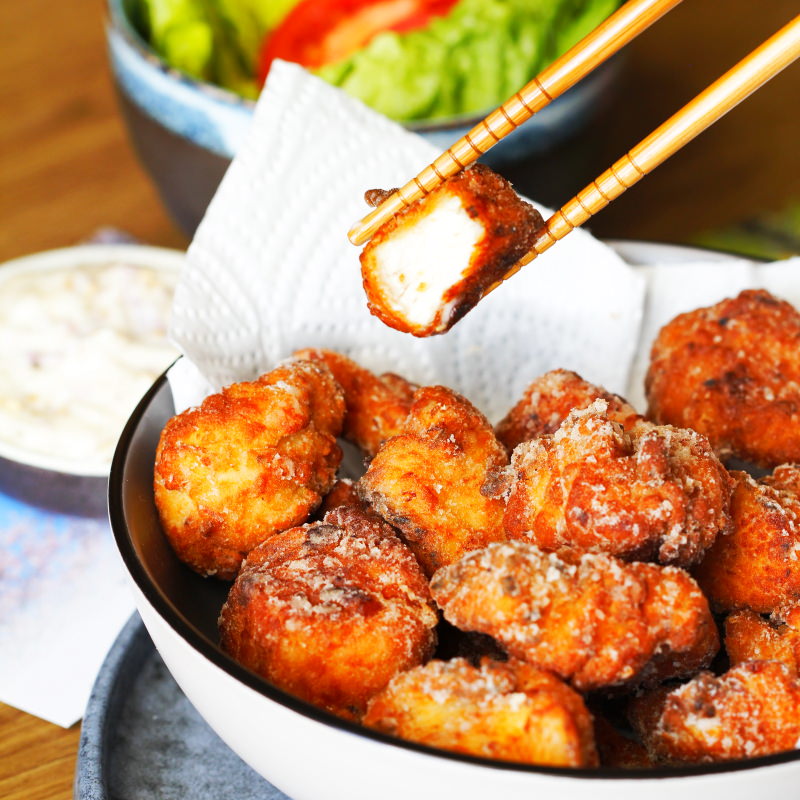
Every region of Japan has its own Karaage variations. In Oita Prefecture, for example, Karaage is especially celebrated, with numerous restaurants showcasing their unique recipes.
Today, Karaage is known and loved worldwide. Its simple preparation and delicious flavour make it a popular dish that brings the flavours of Japan into kitchens around the world. Karaage represents the versatility and creative tradition of Japanese cuisine.
The most important ingredients for perfect Karaage:
- Chicken: In Japan, boneless chicken thigh with the skin on is traditionally used, as it’s particularly juicy and offers more flavour. If it’s hard to find, chicken breast is an excellent alternative that’s also tender and delicious.
- Marinade: The base of a good Karaage marinade consists of soy sauce, Mirin and garlic. These ingredients give the meat a deep, savoury note and make it wonderfully tender. You can extend the marinade as you like by adding ginger, sesame oil, oyster sauce or a pinch of curry to create extra layers of flavour.
- Coating: Potato starch (Katakuriko) is traditionally used for the coating, as it gives Karaage a particularly crispy texture. In Germany, cornflour is often easier to find and can be used as a substitute. However, if you have the option, I recommend using genuine Japanese Katakuriko, which you can also conveniently find in our online shop.
- Oil: Use a neutral oil with a high smoke point, such as rapeseed oil or peanut oil, to ensure your Karaage fries up golden brown and crispy without affecting the flavour.
CUSTOMER FAVOURITE
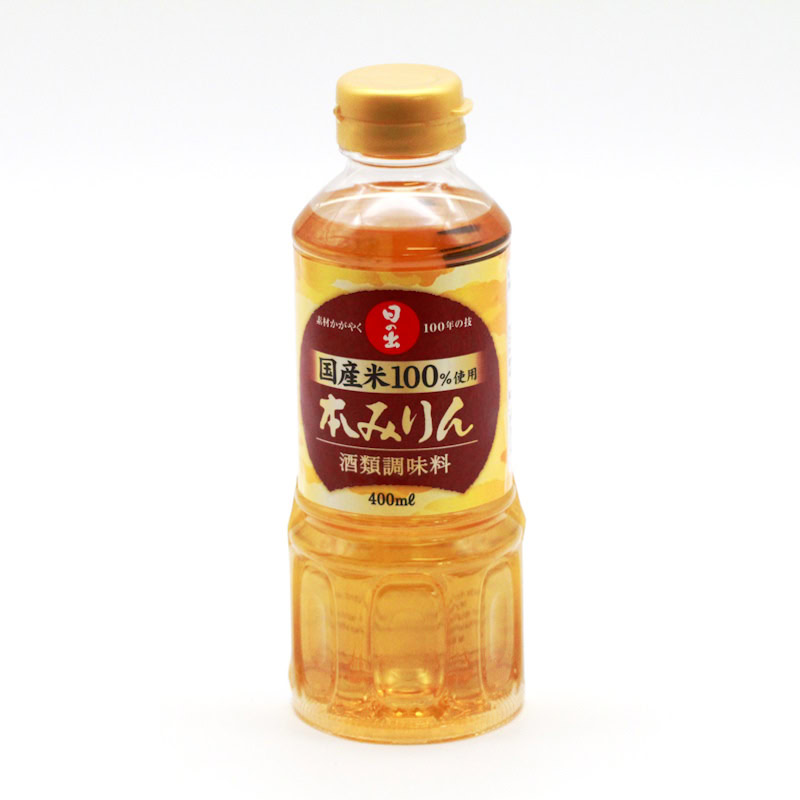
Hon Mirin 400ml (der Echte, aus Japan)
Japanischer süßer Kochwein für Teriyaki, Karaage & japanische Saucen. Hon Mirin von Hinode ist ein traditioneller japanischer Kochwein aus Reis und Koji mit natürlicher Süße…
In stock
Karaage selber machen – so geht’s:
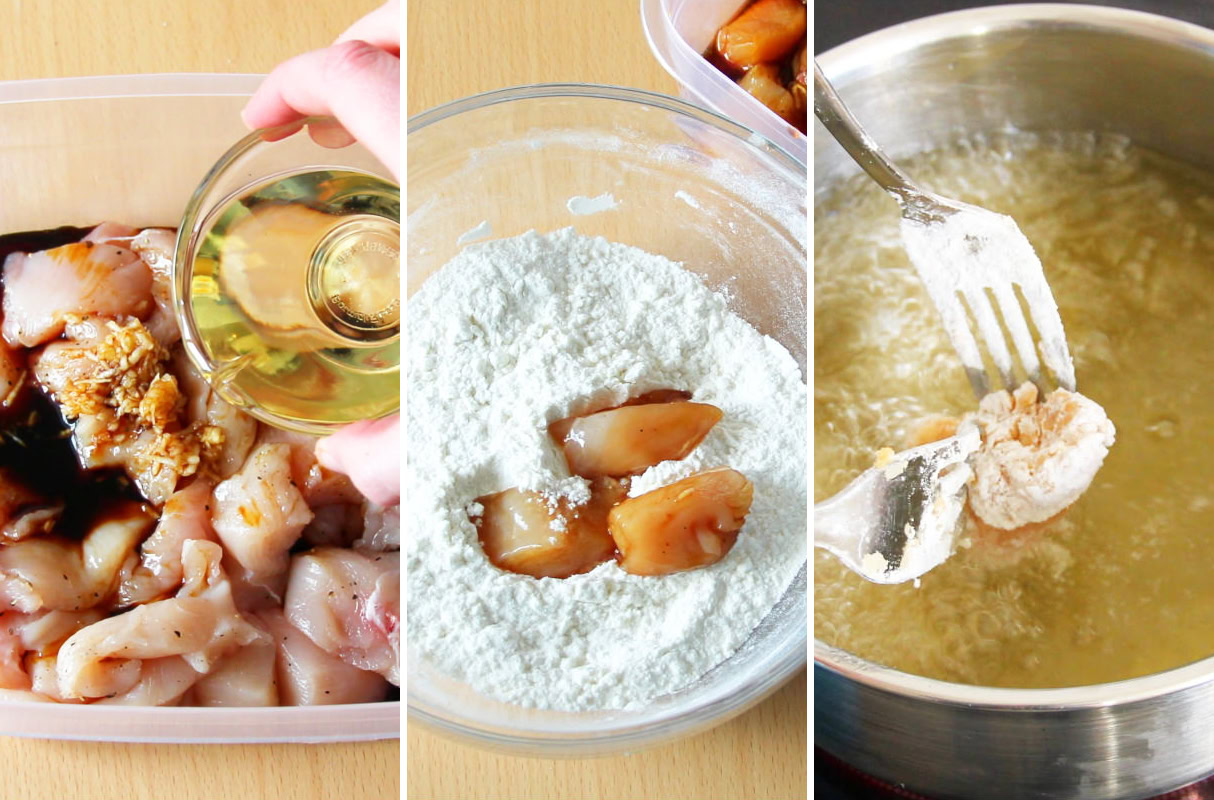
- Marinating: Cut the chicken into bite-sized pieces and marinate it for at least 30 minutes in a mixture of soy sauce, Mirin and garlic. Add further seasonings as you like.
- Coating: Coat the marinated chicken pieces in potato starch or cornflour until they are evenly covered.
- Deep-frying: Heat the oil to 180°C and deep-fry the chicken pieces in batches until they are golden brown and crispy. Drain them on kitchen paper to remove excess oil.
Karaage is not only a culinary delight, but also a perfect accompaniment to many Japanese dishes. Give it a go and enjoy a taste of Japan in your own home! Whether as a savoury highlight at parties or a delicious snack between meals – our karaage adds an authentic Japanese touch to any meal.
Tip
For particularly juicy and flavourful karaage, it is important to marinate the chicken for long enough. It should be at least 30 minutes, but it is even better to leave the meat in the fridge overnight. This allows the flavours of soy sauce, Mirin and garlic to penetrate deep into the meat and give it an intense flavour.
I look forward to hearing more about your karaage experiences. Share your preparation tips and favourite variations with us! We’re curious to see which methods you try out and what secrets you can share for achieving that perfect crispiness.
Do you have any questions about the recipe, or would you like to share your karaage creations with the community? Simply leave a comment below this post. Have fun frying and enjoy your homemade karaage!
Karaage
serves 2 | 90 minutes | 606 kcal
🖨️ Print PDF 📌 Save pinReady for a crispy taste experience? Our karaage recipe brings Japan’s best fried chicken straight to your kitchen. Whether for parties, cosy family meals or as a snack between meals – this deliciously marinated and perfectly fried treat will delight you. With our simple instructions, karaage will become your new favourite dish in no time!
Ingredients (2 servings)
450 g chicken breast (or boneless chicken thighs)
50 ml Shoyu (im Shop ansehen)*
50 ml Mirin (im Shop ansehen)*
1 large garlic clove
75 g plain flour
75 g katakuriko (potato starch) (im Shop ansehen)*
1 tsp salt
1/2 tsp pepper
500 ml oil (e.g. sunflower or rapeseed oil)
For the mayonnaise dip:
200 g mayonnaise (im Shop ansehen)*
1 small onion
1 tsp rice vinegar (im Shop ansehen)*
1 tsp sugar
1/4 tsp pepper
1 tsp sesame seeds (im Shop ansehen)*
Useful tools:
Santoku knife (im Shop ansehen)
Daikon & vegetable grater (im Shop ansehen)
Yukihiara pot (im Shop ansehen)
Kitchen thermometer (auf Amazon* kaufen)
2-in-1 strainer & skimmer (im Shop ansehen)
Preparation (90 minutes)
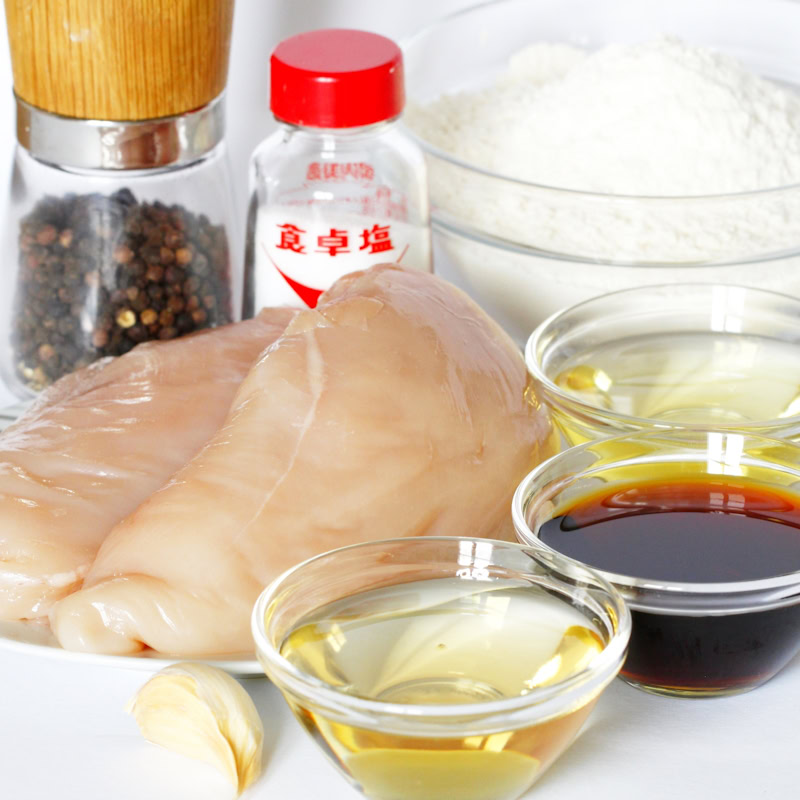
Step 1
Prepare the ingredients for the karaage with aioli sauce and, if desired, prepare 1 bowl of rice as a traditional side dish for each portion (click here for the recipe in a rice cooker or in a saucepan).
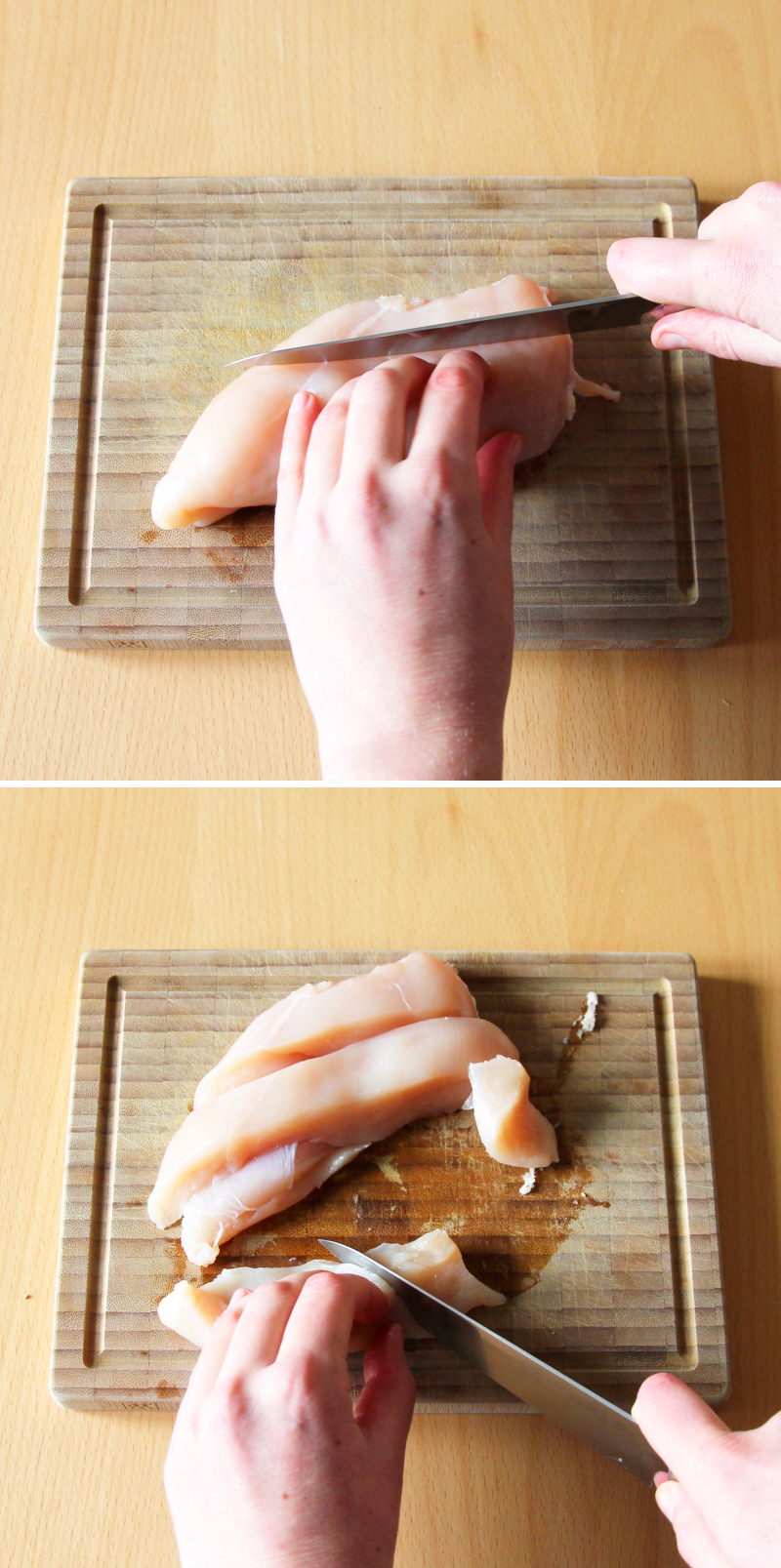
Step 2
First, wash the chicken breast under running water and pat dry thoroughly with kitchen paper. Then cut into smaller, bite-sized pieces (cubes approx. 3–4 cm in size).
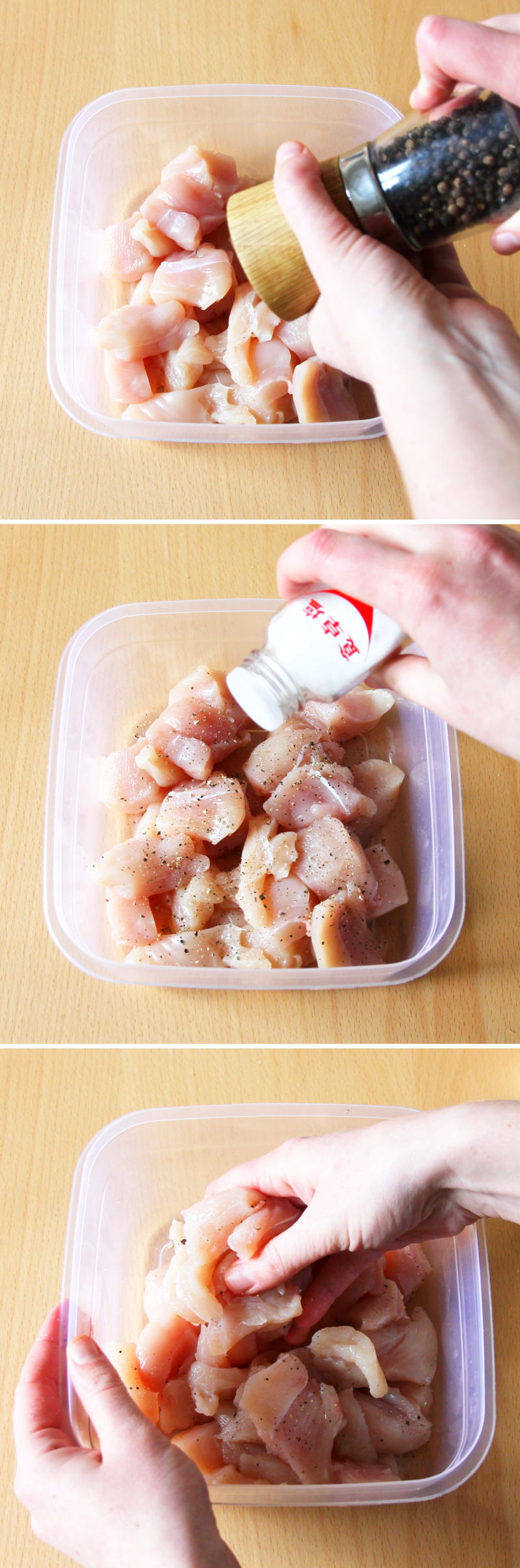
Step 3
Place the chicken cubes in a sealable container and season with salt and pepper.

Step 4
Lightly crush the garlic with the back of a knife, then remove the skin and finely grate it directly into the container with the chicken (for example, using a fine kitchen grater). Also add soy sauce and Mirin . Mix everything together (the chicken should be well coated – top up with equal parts soy sauce and Mirin if necessary), close the container and leave the chicken to marinate in the fridge for 1 hour.

Step 5
In the meantime, to make the delicious dip , mix the mayonnaise, finely chopped onions, rice vinegar, sugar, pepper and sesame seeds in a bowl and place in the fridge until ready to serve.
Step 6
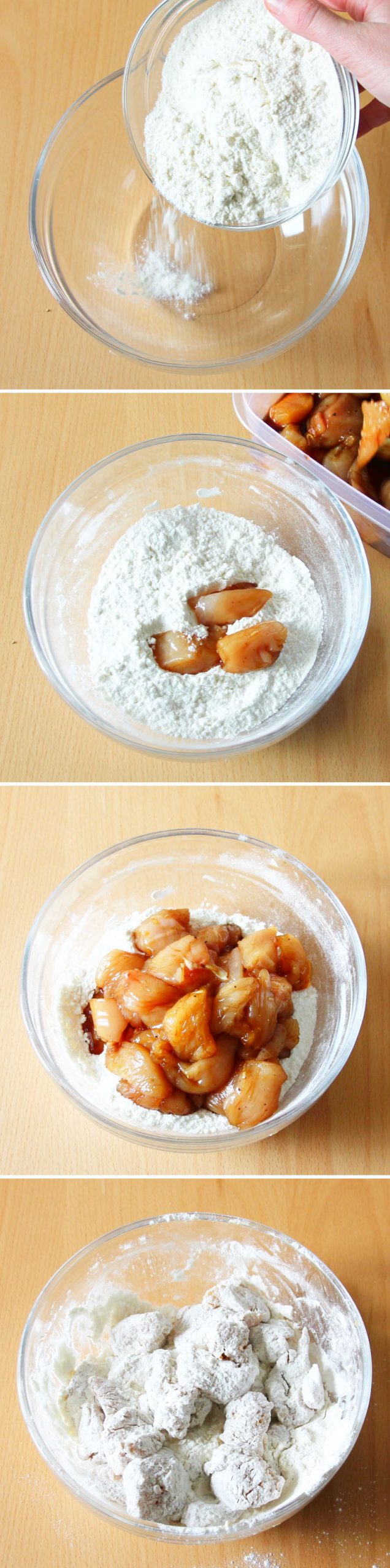
After the marinating time, mix the wheat flour with the potato starch (other types of starch also work, but the coating will be crispier if you use 100% potato starch) in a bowl. Remove the chicken from the fridge and place the individual pieces (lightly drained) into the flour mixture. Use your hands to coat the chicken well with the flour, ensuring each piece is covered in the coating.
7. Step
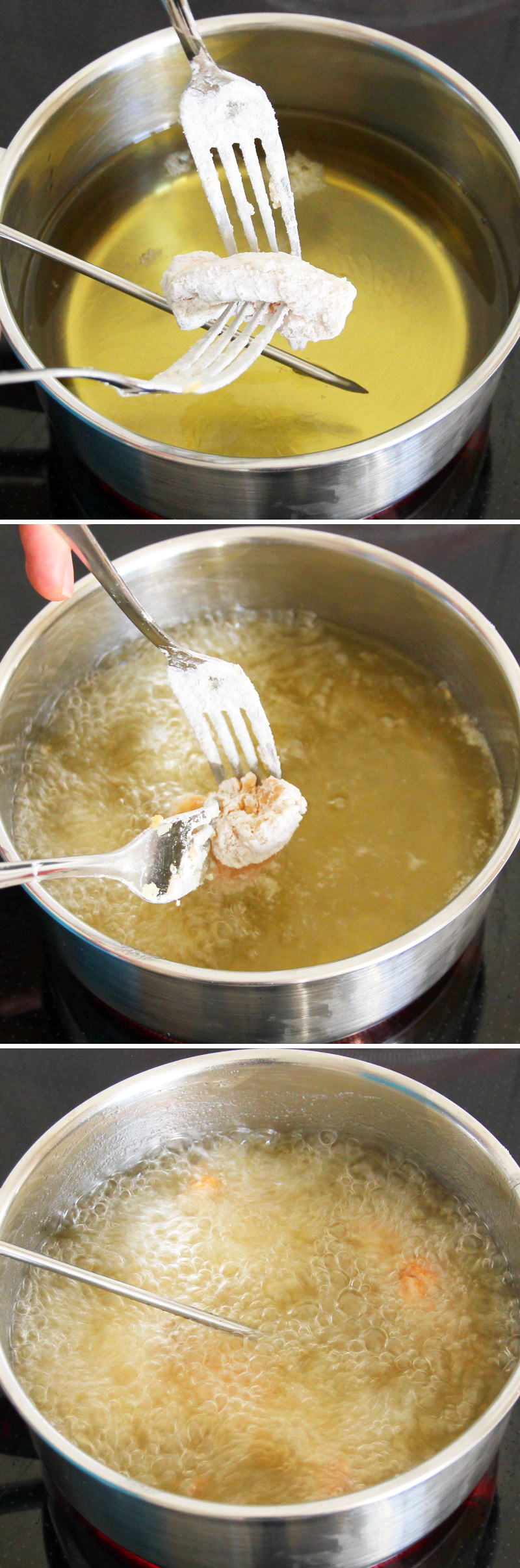
In a deep pan heat the oil to 175°C. Monitor the oil with a kitchen thermometer whilst frying, as the oil should always be between 160–180°C for a perfect result.
Once the oil has reached the correct temperature, carefully place 6 pieces of chicken into the pan at a time and fry for 4 minutes (turning them occasionally so that all sides brown nicely).
Step 8
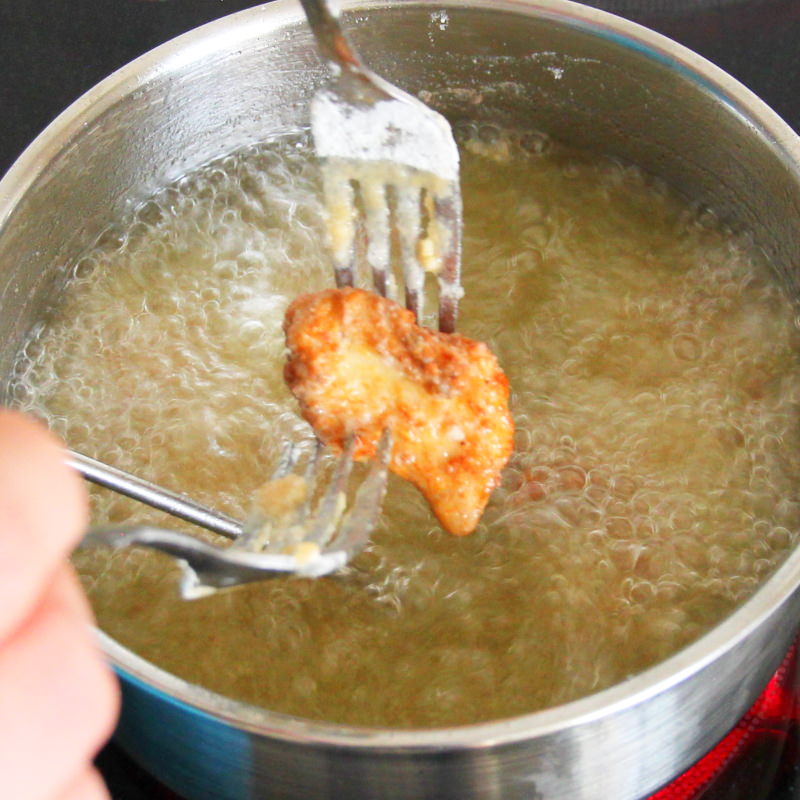
Then carefully lift them out of the oil and place them on some kitchen paper laid out ready to drain. Repeat the frying process until all the chicken has been used up – between frying batches, check the oil temperature and allow it to rise to at least 160°C again.
Step 9
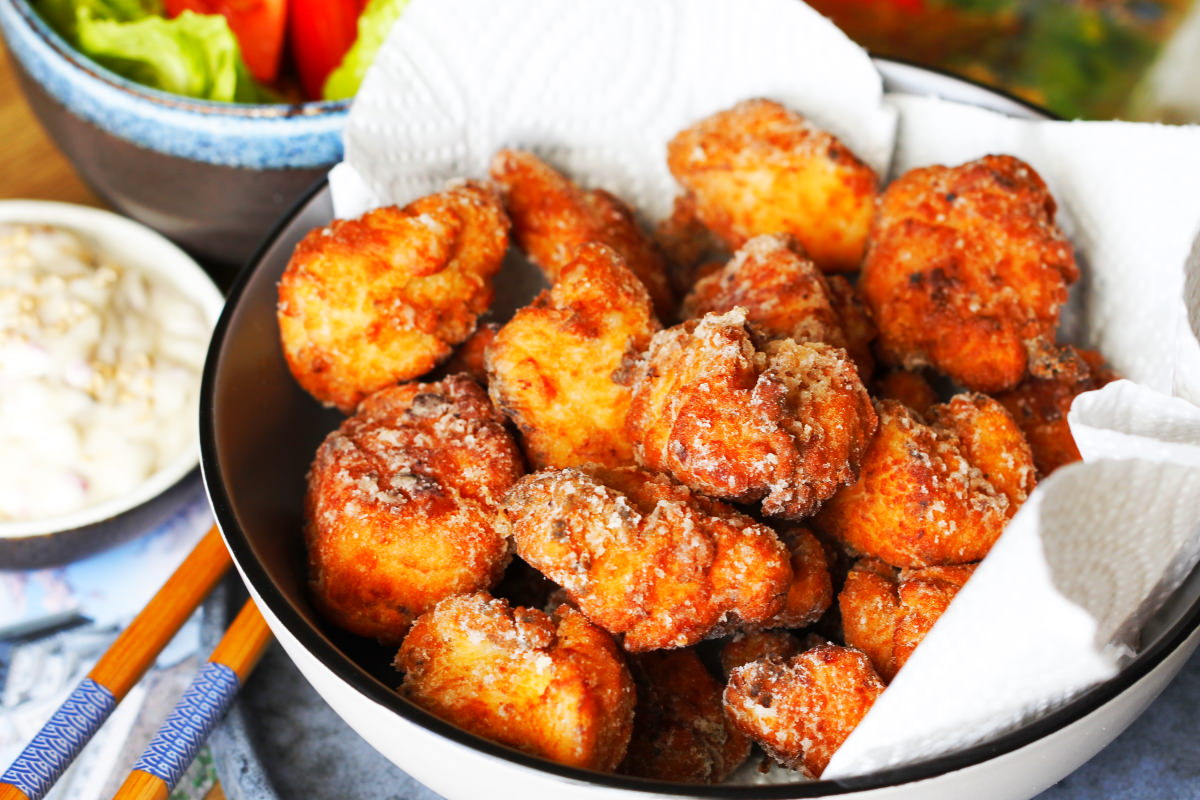
Serve the finished karaage with the mayonnaise dip and freshly cooked rice. Ready – Itadakimasu!
Of course, there are plenty of other side dishes that go really well with this recipe:
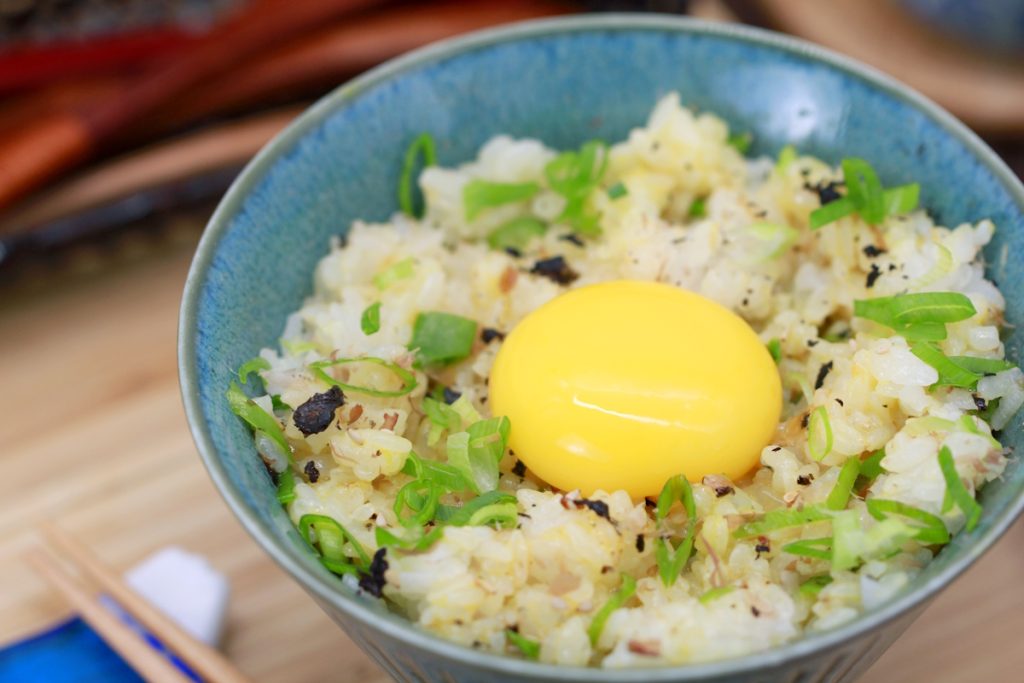
Tamago Kake Gohan: Japanese breakfast rice with egg, Furikake & Katsuobushi | TKG
In this recipe, I’ll show you a particularly flavourful version of Tamago Kake Gohan (TKG)…
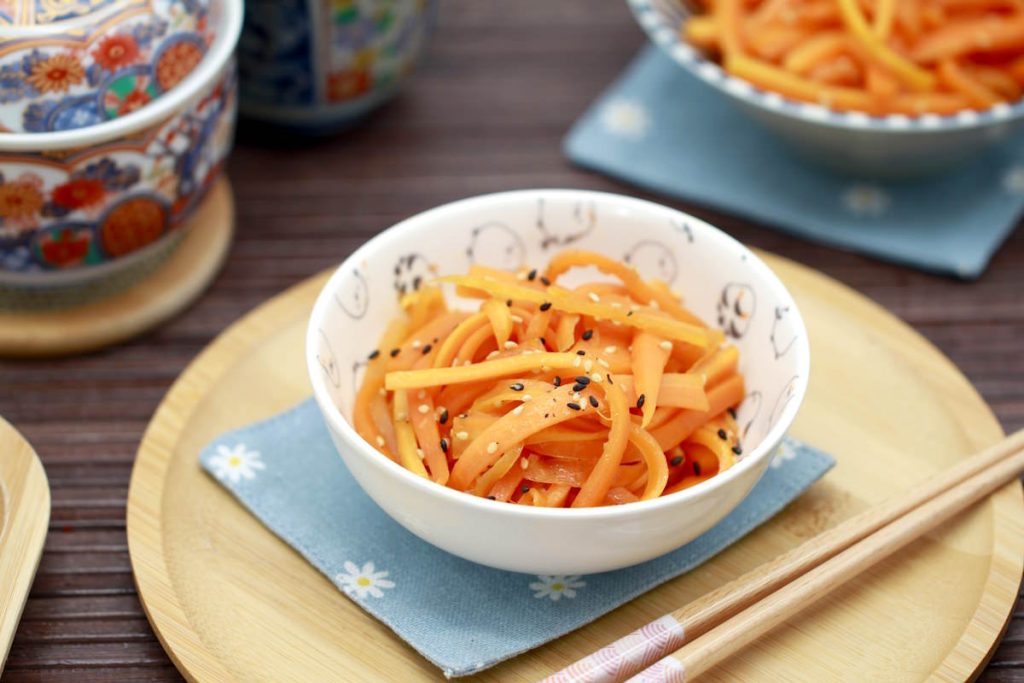
Make your own Ninjin no Kinpira: Japanese carrot side dish in the Kinpira style
Ninjin no Kinpira is a simple Japanese side dish made from finely sliced carrots, which…
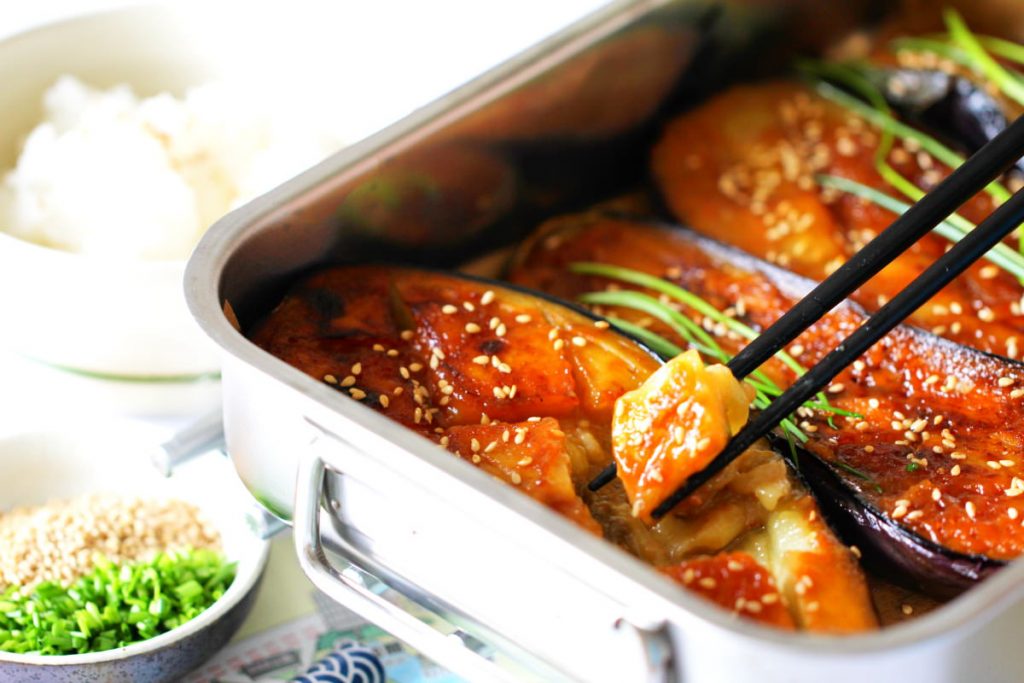
Nasu Dengaku: Oven-baked aubergines glazed with Miso – simple & irresistible
Nasu Dengaku is a true classic of Japanese cuisine and perfect as a side dish…
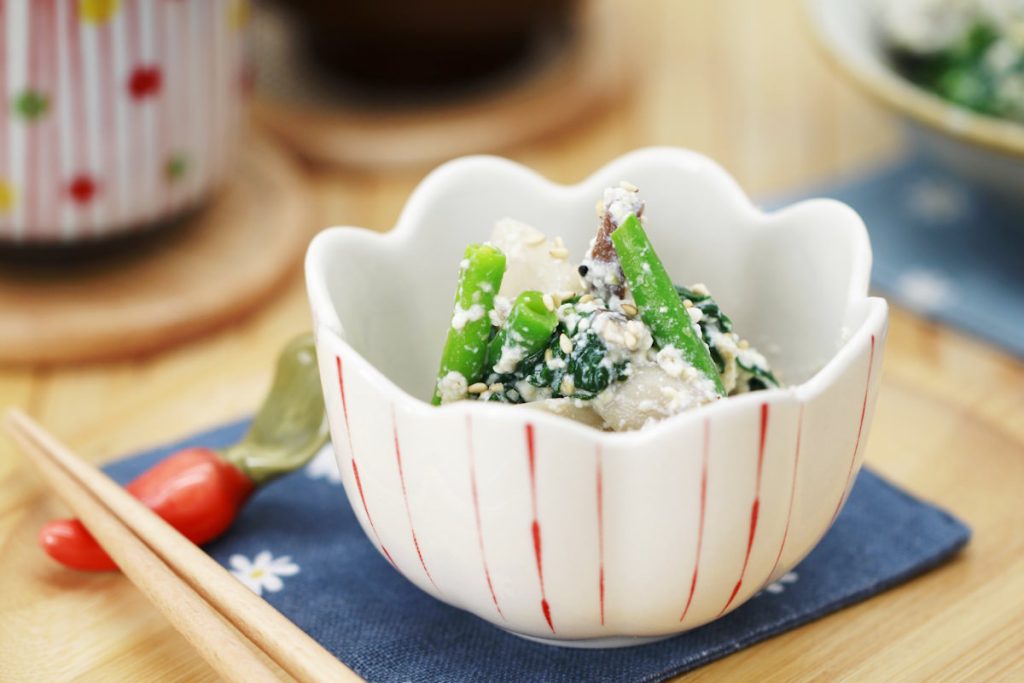
Mushroom and spinach salad with sesame and Tofu dressing: Recipe for Yasai no Shira ae
Mushroom and spinach salad with sesame and Tofu dressing, also known as Yasai no Shira…
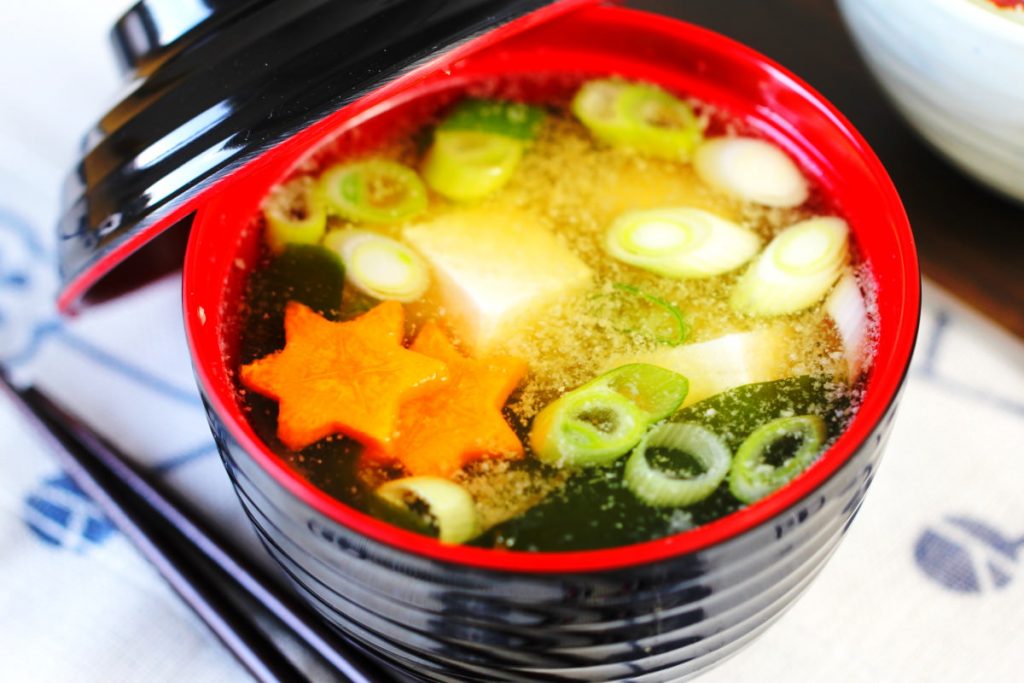
Misoshiru in a flash: basic recipe for miso soup with Wakame & Tofu
Miso soup is much more than just a side dish in Japan – it’s a…
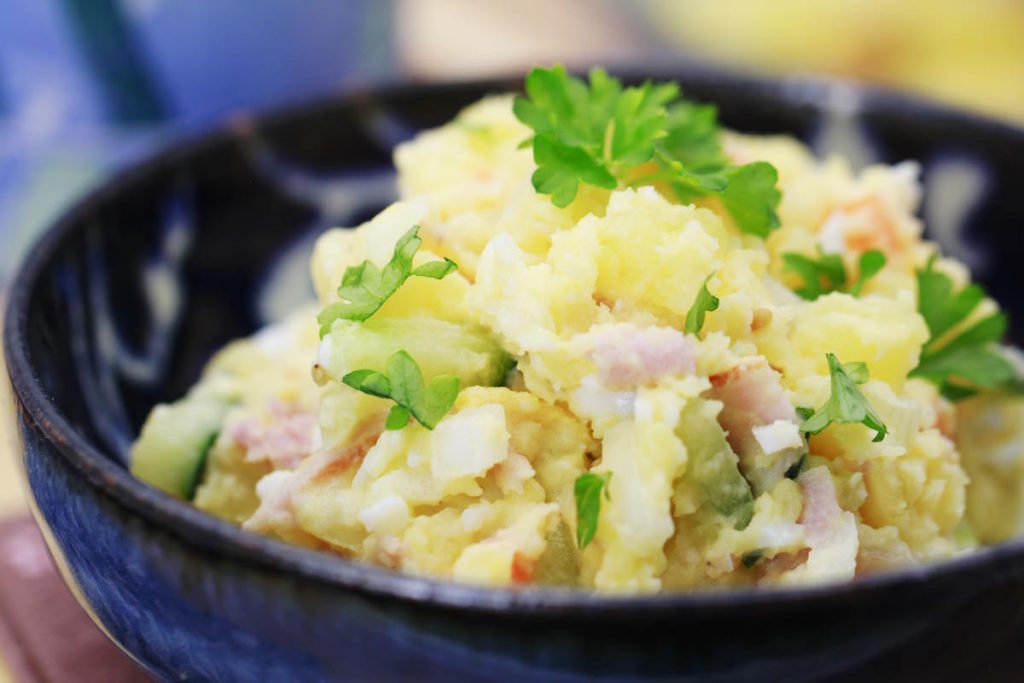
Make your own Japanese potato salad: fresh, creamy and irresistible!
If you’re looking for a delicious side dish that’s both familiar and excitingly new, then…